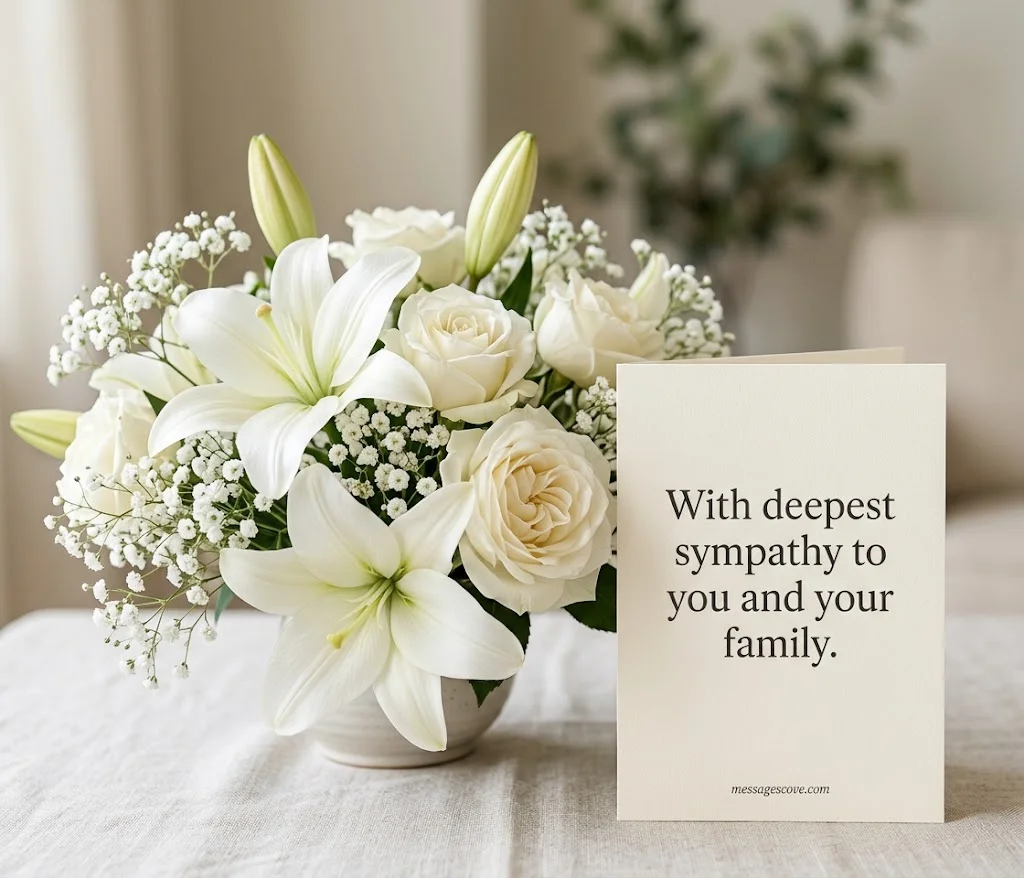
Words feel small when someone has died. You want the flowers to say what you can’t. A short, sincere note on the card does that.
This guide gives you 25 sympathy messages for funeral flowers. You will also learn what to write on funeral flowers, how to sign the card, and which wording fits each flower.
Table of Contents
What to Write on a Funeral Flower Card
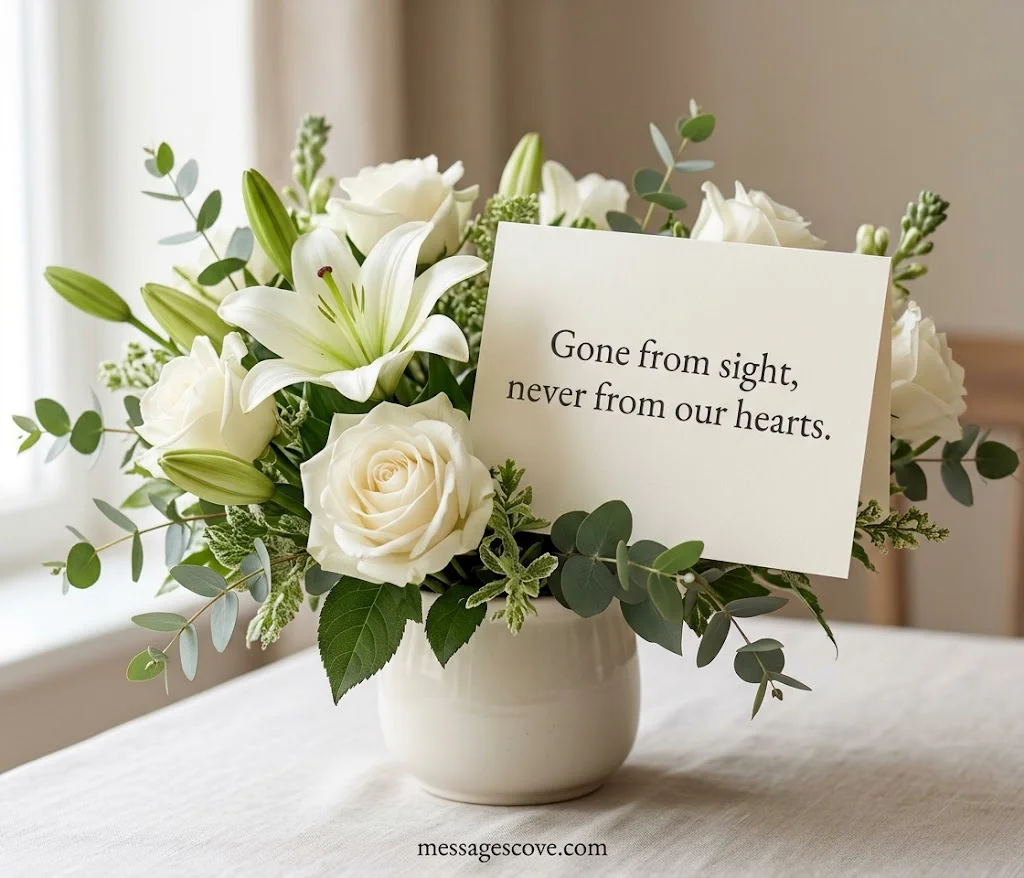
A good funeral flower card message is short, warm, and signed clearly. One or two lines are enough, because the card is small and the family may read dozens of them.
Use this simple formula. Start with a sympathy line. Add a kind word or a small memory. Close with your name.
Funeral flowers vs. sympathy flowers: Flowers sent to the funeral home are called funeral flowers. Flowers sent straight to the grieving family are called sympathy flowers. If you are unsure where to send them, the funeral home is a safe choice, and you can call them to check (Legacy.com guide).
Here is what else helps you write the right note:
Sign it clearly. Use your full name, your family name, or your company name. The family can then match each arrangement to a sender later.
Match the card to the arrangement. A casket spray or standing spray often comes from close family. A friend or coworker might send a smaller arrangement or a plant to the home.
Know the family’s faith. Some traditions skip flowers at the service. For example, flowers are not present at a Jewish funeral, though you can still send sympathy to the family, and a fruit basket may be preferred (News On 6). Read the obituary for “in lieu of flowers” requests and follow them.
Mind the timing. Funeral flowers need to arrive in time for the funeral, but sympathy flowers can be sent at any time.
Skip risky phrases. Avoid “I know how you feel,” “everything happens for a reason,” and “he is in a better place” unless you know their beliefs. Skip long poems too. They rarely fit on a small card.
If you barely knew the person, keep it plain and kind. A short line of sympathy is always welcome.
Sympathy Messages for Funeral Flowers
Use these sympathy messages for funeral flowers as they are, or add a name or a memory. Each one is ready to copy.
Short and classic:
With deepest sympathy to you and your family.
We are holding you close in our thoughts today.
Gone from sight, never from our hearts.
For a friend:
Thank you for the laughs, the advice, and the years of friendship. You will be missed, my friend.
You were the kind of friend people dream of. Rest easy.
For close family:
Mom, your love still fills every room. I miss you more each day.
Dad, you taught me how to stand tall. I will carry that with me always.
My love, thank you for every ordinary day and every big one. Until we meet again.
For a coworker or boss:
Your steady kindness made work a better place. We will miss you.
With sympathy from all of us at [Company Name].
Religious:
May God hold you in His peace and comfort your family in their sorrow.
Praying for strength and peace for your family. May your loved one rest in God’s care.
Non-religious:
May the stories you share bring comfort in the days ahead.
From neighbors or a group:
With love and sympathy from your neighbors on [Street Name].
A gentle closing line:
Love does not end. It lives in every memory you hold.
Funeral Flower Card Messages by Flower Type and Color

Flowers carry meaning, and your funeral flower card wording can echo it. Many popular sympathy flowers are chosen for their symbolic meanings, and lilies are probably the most common choice. Color matters too. About 70% of Americans say flower color adds to the impact of the gift, according to the Society of American Florists.
White is the most traditional color for sympathy flowers. It stands for peace and purity. Soft pastels feel calm and gentle. Red often shows deep love, and yellow shows warmth and friendship.
While funeral flowers offer comfort during times of loss, creative messages can also bring joy and inspiration to everyday moments. If you enjoy sharing meaningful words for different occasions, explore these International Animation Day messages and wishes to celebrate creativity, imagination, and the magic of animation.
Lilies for peace. Holding you and your family close.
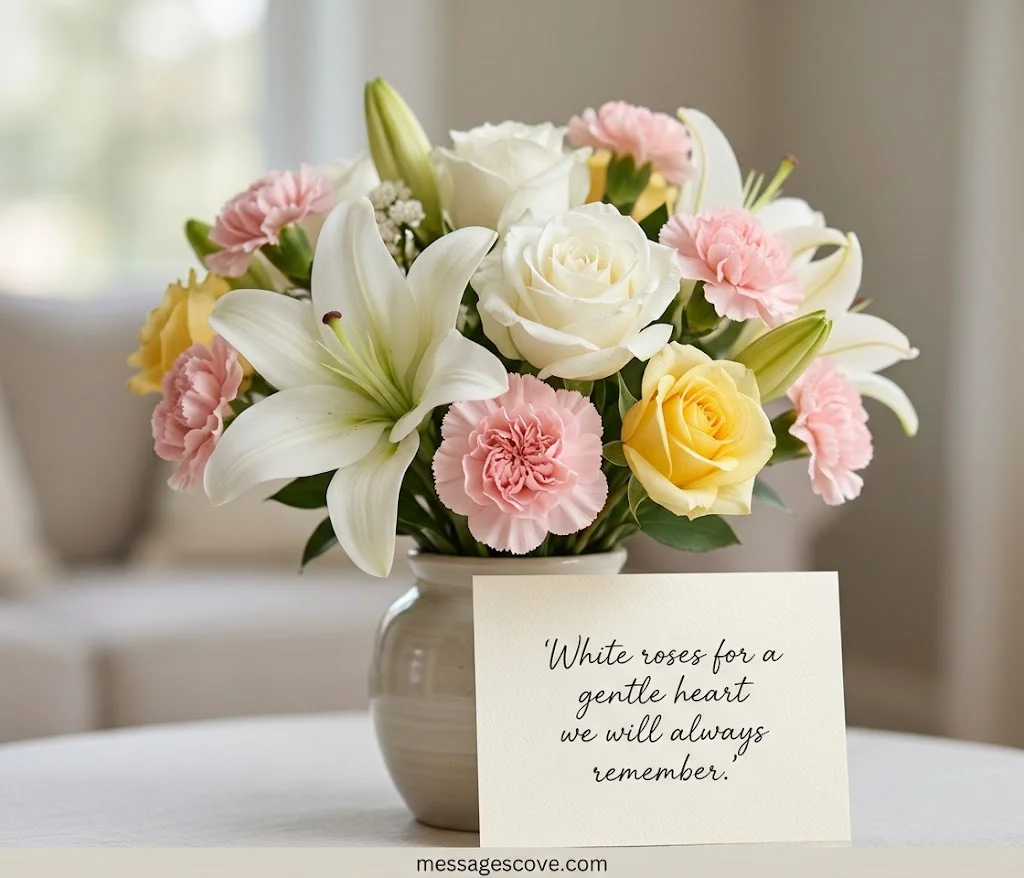
White roses for a gentle heart we will always remember.
Red roses for the deep love you shared. Forever cherished.
Yellow roses for the warmth and friendship you gave so freely.
Carnations for love that lasts. Thinking of you all.
Chrysanthemums for a life lived with heart. Always remembered.
Sunflowers for the joy you spread everywhere you went.
Soft pink blooms for a gentle spirit. With quiet love and care.
Orchids for grace and strength in the days ahead. With sympathy.
This plant will grow as your memories do. With heartfelt sympathy.
When and Where to Send Funeral Flowers
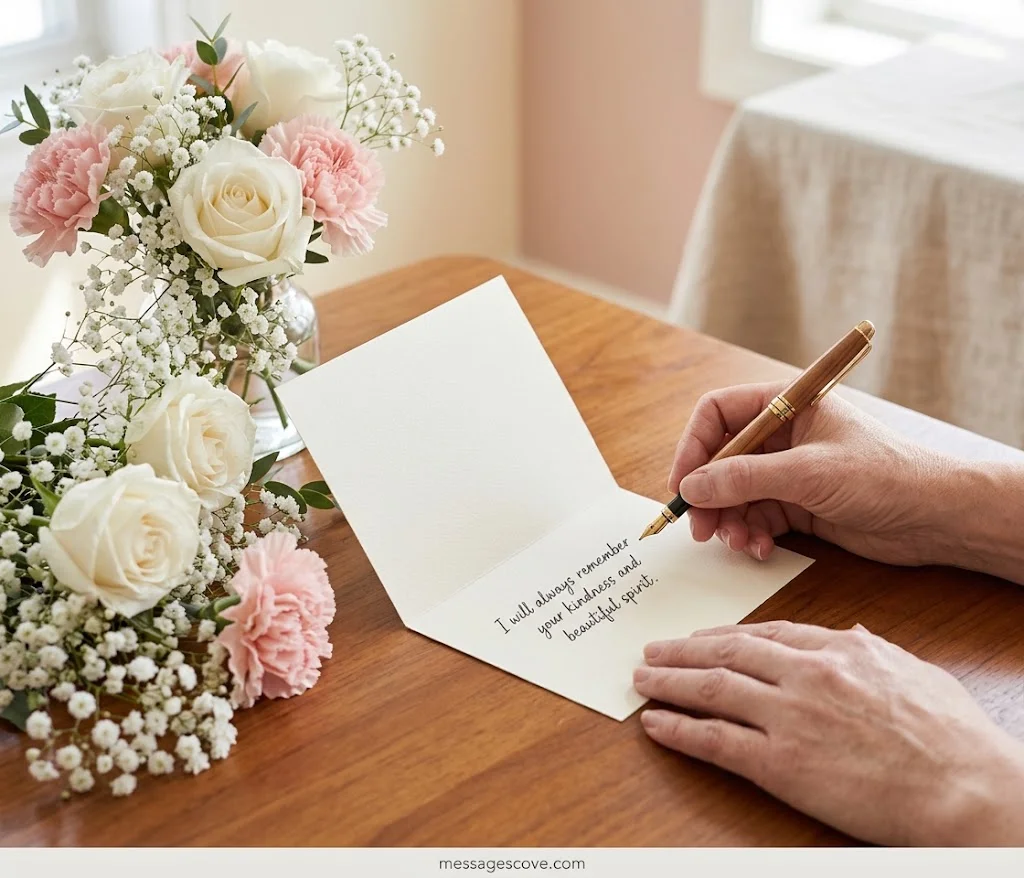
Timing and delivery shape what your card says. A card that arrives late or at the wrong address can add stress for the family.
Send them early. You can order as soon as you hear the news. Funeral flowers need to arrive in time for the funeral. Call the funeral home first and ask for the delivery window, the address, and the service time.
Choose the right place. Flowers can go to the funeral home or to the family’s house. Today it is more common to send sympathy flowers to the person’s home than to the funeral, and home flowers can be enjoyed for longer after the service (Grief and Sympathy).
Send them late if you missed the date. Sympathy flowers can be sent at any time. A card a few weeks later can mean a lot, because most support fades after the service.
Check the obituary. If the family asks for donations “in lieu of flowers,” follow their wish. You can still send a card with a short note of sympathy.
Give the florist the exact wording. Spell the name of the person who died and the family name correctly. Add your full name for the sign-off. Ask the florist to read the message back to you.
When someone loses a loved one, heartfelt words can offer comfort and remind them they are not alone in their grief. In the same spirit of compassion and support, sharing World Stroke Day messages and awareness captions can help encourage stroke awareness, support survivors and caregivers, and spread life-saving knowledge.
How to Personalize a Funeral Flower Card Message
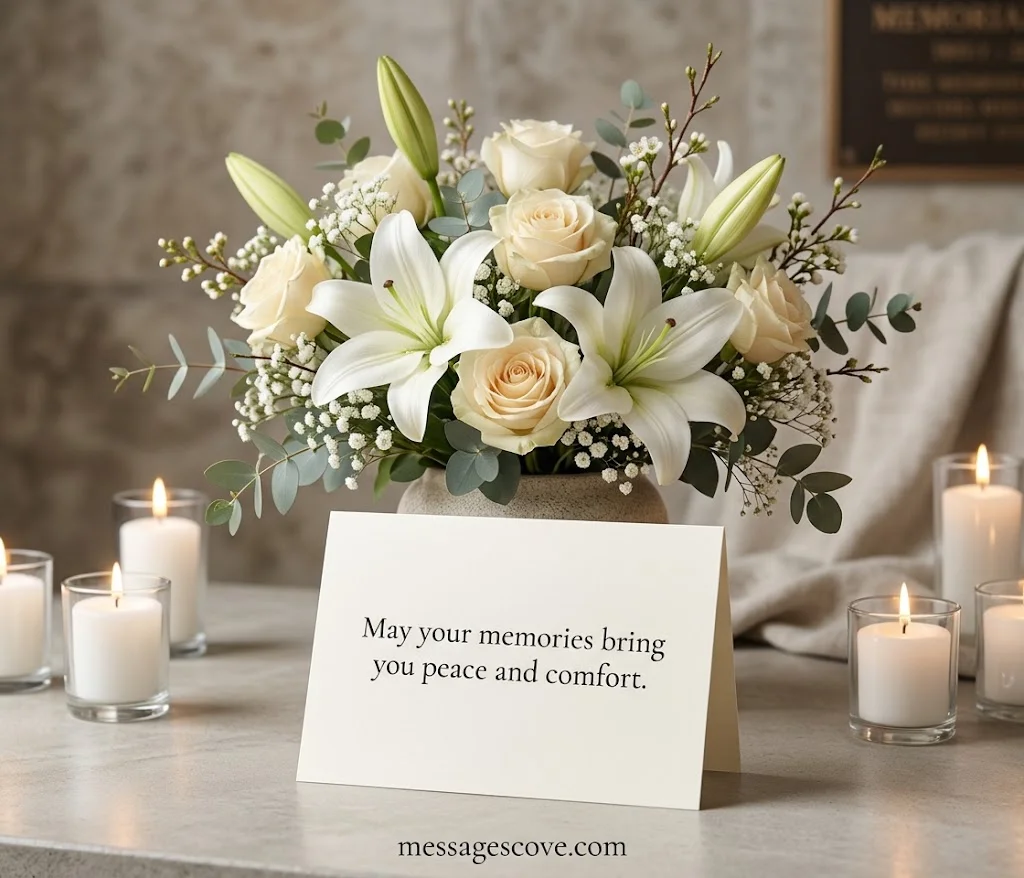
A personal line stands out because it can only come from you. It does not need to be long. One true detail is enough.
Try this simple pattern: sympathy line + one detail + your name. Pick one detail from the list below:
A trait. Think of what made the person special. It could be kindness, humor, patience, or generosity.
A shared moment. A Sunday dinner, a road trip, or a job you finished together all work.
A habit. People smile when they read about a favorite joke, a famous recipe, or a warm greeting.
A thank-you. Say what they gave you, such as advice, time, or a steady presence.
Keep the full note under two lines. Write in the first person, like “I will miss…” or “I am grateful for…”. Then add a gentle close for the grieving family, like “Thinking of you all.” Read it once out loud. If it sounds like you, it is ready.
If you did not know the person well, name the family instead. Write to them, and say you are holding them in your thoughts.
FAQs
Here are quick answers to common questions about what to write on funeral flowers.
What do you write on a funeral card for flowers?
Keep it short. Start with a sympathy line, such as “With deepest sympathy.” Add a kind word or a small memory if you knew the person. Sign with your name or family name so the grieving family knows who sent the flowers.
What do you write when you send flowers to a funeral?
Write one or two sincere lines. Name the person who died if you can. Say you are thinking of the family. Avoid long poems and phrases that assume their beliefs. The sympathy messages above work for most funerals.
What are some good quotes to write on funeral flowers?
Short lines about love, memory, or peace work best. Keep the quote to one sentence and add your name. If you quote a known author, credit them. A short personal line often means more than a famous quote.
What is the best message for a funeral?
The best message is honest and simple. A short line of sympathy, or a note that you are thinking of the family, works well. A small personal memory makes it special. Match your tone to the family’s faith and culture.
Conclusion
Simple words carry the most comfort. Be sincere, keep it short, and sign your name clearly. Use the sympathy messages for funeral flowers above as a starting point, then add one detail only you know. The family will remember that line long after the service.

Kashif Abroy is the founder and content creator behind MessagesCove, a website dedicated to helping people find thoughtful words for everyday conversations, special occasions, celebrations, and meaningful moments.